

If a hot flash has ever caught you mid-conversation, mid-meeting, or wide awake at 2 a.m. — you already know the feeling needs no introduction. What’s less obvious is why it happens, and whether anything you’re doing day to day is making it worse. Both questions have real, practical answers.
Why hot flashes happen
A hot flash isn’t random. It’s your body’s temperature control system — the hypothalamus — reacting to a drop in estrogen during perimenopause and menopause. Lower estrogen makes the hypothalamus more sensitive to small shifts in body temperature, so it can mistake a normal, minor warm-up for overheating. Its response is the chain of events you feel as a hot flash: a sudden wave of heat, often starting in the chest and face, sometimes followed by sweating and then a chill as your body overcorrects back down.
This is also why hot flashes tend to ease over time — as hormone levels settle into their new, lower baseline (rather than continuing to shift), the hypothalamus generally becomes less reactive. It doesn’t make the middle stretch any less uncomfortable, but it does mean this isn’t a permanent new normal.
Common triggers worth knowing
Not every hot flash has an obvious cause, but several everyday things reliably bring one on for many women. Knowing your own pattern is often the single most useful thing you can do.
- Warm environments — a hot room, heavy blankets, or being overdressed
- Spicy food — a very common and often-underestimated trigger
- Caffeine and alcohol — coffee and red wine come up especially often
- Stress — emotional spikes can trigger a flash even in a cool room
- Carrying extra weight — hot flashes are often reported as more frequent or more intense at
higher body weight
- Smoking — an established trigger, and one more reason (among many) to consider quitting
None of these guarantee a hot flash, and you may find your own list looks different. That’s normal — the value is in noticing your pattern, not matching someone else’s.
A simple way to spot your own pattern
Before reaching for a fix, it helps to know what you’re actually dealing with. For a few days, jot down when a hot flash happens and what was going on right before it — what you ate or drank, the room temperature, your stress level, time of day. Most people find a pattern shows up faster than expected, and it’s often something genuinely changeable (a habitual afternoon coffee, a too-warm bedroom) rather than something mysterious.
If you’re not already tracking symptoms day to day, our guide on how to track menopause symptoms walks through a simple way to do this that takes just a couple of minutes each day.
Relief strategies that actually help
In the moment:
- Sip something cold and step somewhere cooler if you can
- Take slow, deep breaths — this can help you feel calmer while it passes, by signaling your body to
relax rather than escalate
- Dress in layers you can remove quickly rather than one heavy outfit
Day to day:
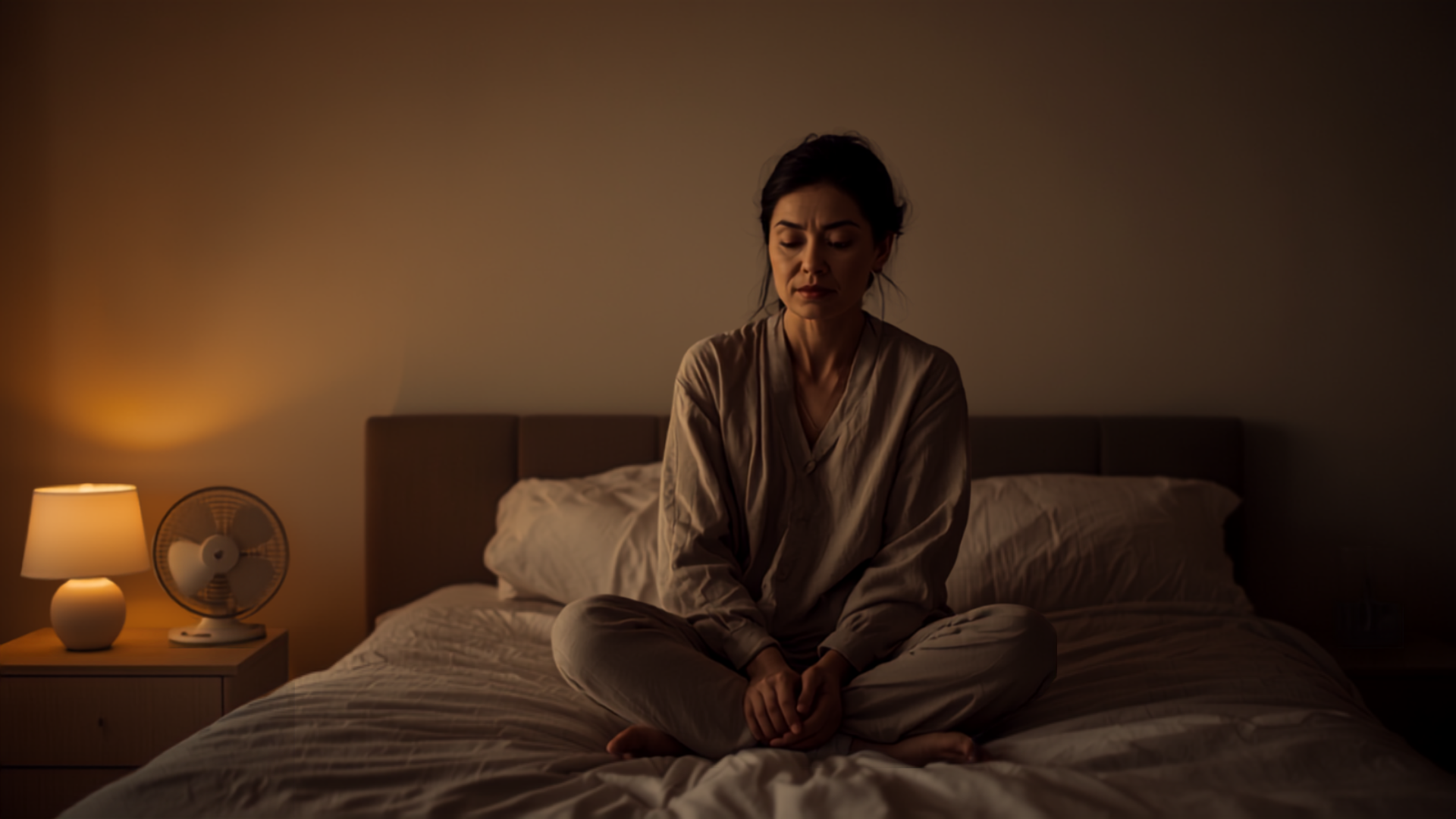
- Keep your bedroom cool and use breathable, layered bedding — a common source of relief for
night sweats specifically
- Notice and gently reduce your personal triggers (spicy food, caffeine, alcohol) rather than
cutting everything at once — small, sustainable changes tend to stick better than a strict overhaul
- Regular movement and, where relevant, working toward a comfortable weight are both associated
with fewer and milder hot flashes over time
- Mindfulness practices — slow breathing, meditation, guided imagery — help some women reduce
both the frequency and the intensity of flashes, likely by lowering the stress-related triggers above
When it’s worth a medical conversation: Hormone therapy remains the most effective treatment for frequent or disruptive hot flashes, and several non-hormonal medication options exist as well, including specific antidepressants used off-label and a newer, dedicated non-hormonal treatment approved for moderate-to-severe hot flashes. None of this needs to be figured out alone — if hot flashes are disrupting your sleep, work, or daily comfort, that’s a reasonable and common reason to bring it to a doctor, not a sign you should have managed it better on your own.
Putting it together
Hot flashes are a hormonal response, not a personal failing, and they respond to a mix of awareness and small, practical changes: noticing your own triggers, adjusting the ones that are easy to adjust, using in-the-moment tools like cool drinks and slow breathing, and knowing that medical options exist if lifestyle changes aren’t enough on their own. Most women find real relief from a combination of these, not a single fix.
If you’d like a simple way to connect your hot flashes to your other symptoms — sleep, mood, and what seems to help — the free 7-Day Symptom Starter Log is a gentle place to start. For tracking the fuller picture over months, including which natural remedies you’ve tried and what actually worked, the Menopause Balance Tracker keeps it all in one place.
For more on this whole transition, our Menopause & Perimenopause FAQ covers the questions that come up most, and our pages on intimacy and body comfort and common menopause symptoms cover other physical changes worth knowing about.
FAQ
Are hot flashes the same thing as night sweats? Essentially yes — a night sweat is just a hot flash that happens while you’re asleep, often intense enough to wake you or leave bedding damp. The same triggers and relief strategies apply to both.
How long do hot flashes typically last? Individual episodes usually last a few minutes, but the overall pattern of having them can continue for several years for many women, with frequency and intensity easing gradually rather than stopping abruptly.
Can diet alone stop hot flashes? Diet changes — cutting back on spicy food, caffeine, and alcohol — can meaningfully reduce frequency for some women, but they don’t eliminate hot flashes for everyone. They’re worth trying first because they’re low-risk and often help, not because they’re guaranteed to be enough on their own.
Is it normal for hot flashes to suddenly get worse? A noticeable increase can happen with added stress, weight changes, or simply as hormone levels continue shifting through perimenopause — but a sudden, significant change is also a reasonable reason to check in with a doctor rather than assume it’s just “part of it.”
Do hot flashes mean I’m close to menopause? Not necessarily — hot flashes can start years before your final period, during early perimenopause, and can also continue for some time after menopause is reached. They’re a sign of shifting hormones, not a precise clock.
Pingback: Why Did I Walk Into This Room? Brain Fog in Perimenopause and What May Help – 🏡 Guide to Harmony