Women’s Balance
Women’s bodies move through many natural phases during life. From the first menstrual cycles to the years of maturity, the body is constantly adapting and responding to internal rhythms, environment, stress, nutrition, lifestyle, and hormonal change.
Sometimes these changes are easy to understand. At other times they can feel confusing, unpredictable, or isolating. A woman may notice shifts in sleep, mood, energy, concentration, skin, digestion, body temperature, intimacy, or emotional sensitivity without knowing exactly why.
This space was created as a calm place to begin. It is for women who feel that something in the body has changed and want to understand those signals with more curiosity, respect, and steadiness.
A Body That Is Adapting
Women’s balance is not about perfection. It is about learning to listen.
At Guide to Harmony, women’s balance is approached with respect for the body’s natural intelligence. Rather than seeing every symptom as a problem to fight, we explore changes as signals that may help reveal what the body needs.
Every woman’s experience is unique. Some women notice only small changes. Others experience symptoms that influence daily life. There is no single path that fits everyone, and there is no need to understand everything at once.
A gentle first step is simply to observe: what has changed, when it happens, what makes it better, and what seems to make it stronger.
Menopause as Part of Women’s Balance
Menopause is a natural transition in a woman’s life. It does not arrive suddenly, but often unfolds gradually over time as the body adjusts to changing hormone patterns.
For many women, this stage brings new sensations, shifts in energy, changes in sleep, and emotional fluctuations. Some changes are subtle. Others may feel unexpected or difficult to explain.
The body is not failing or breaking. It is adapting.
During perimenopause and menopause, hormone patterns can influence many areas of daily life. Sleep may become lighter. Mood and concentration may fluctuate. Physical sensations such as warmth, dryness, tension, restlessness, or fatigue may appear. Energy can vary from day to day.
Understanding that these experiences are shared by many women can be reassuring. It can also make it easier to ask better questions, notice personal patterns, and seek support when needed.
Why Awareness Matters
Observation is often the first step toward balance.
When women begin to notice patterns in sleep, stress, nutrition, movement, emotional state, and physical sensations, the body’s messages can become clearer. Over time, this awareness can help guide supportive habits and more meaningful conversations with healthcare professionals.
Awareness does not mean searching for problems. It simply means paying attention to what the body is communicating.
Small daily notes can gradually create a clearer picture of how the body responds to rest, stress, food, activity, relationships, and daily rhythm.
What You May Notice
Menopause and hormonal transitions can influence many areas of wellbeing. You may notice changes in one area, several areas, or in patterns that come and go.
Common areas to observe include:
- sleep quality, night waking, or waking at the same hour
- mood changes, emotional sensitivity, irritability, or anxiety
- brain fog, forgetfulness, word-finding, or difficulty focusing
- energy changes, fatigue, or feeling less resilient than usual
- body temperature, warmth, sweating, or sudden waves of heat
- intimacy, body comfort, dryness, or changes in desire
- changes in digestion, skin, tension, or general body awareness
A Gentle Way to Use This Section
If you have just arrived here, begin with the topic that feels closest to your current experience. You do not need to read everything in order.
If your body feels confusing or unpredictable, start with common menopause symptoms. If sleep is the main issue, begin with sleep and night waking. If your emotions or concentration have changed, explore mood or brain fog. If you want to see patterns more clearly, begin with the tracker.
Each page looks at one aspect of the menopause transition and offers simple reflections to help you better understand the body’s signals.
Understanding Menopause
Understanding the menopause transition doesn’t have to feel overwhelming. Whether you’re wondering if you’re entering perimenopause, trying to understand your symptoms, or preparing for your next doctor’s appointment, these guides can help.
Understanding the Stages
- 10 Signs of Perimenopause You Might Be Missing — Not sure if what you’re feeling has a name? Start here to recognize the early signs.
- Perimenopause vs. Menopause: What’s Actually Different? — Once the signs feel familiar, this untangles exactly which stage you’re in.
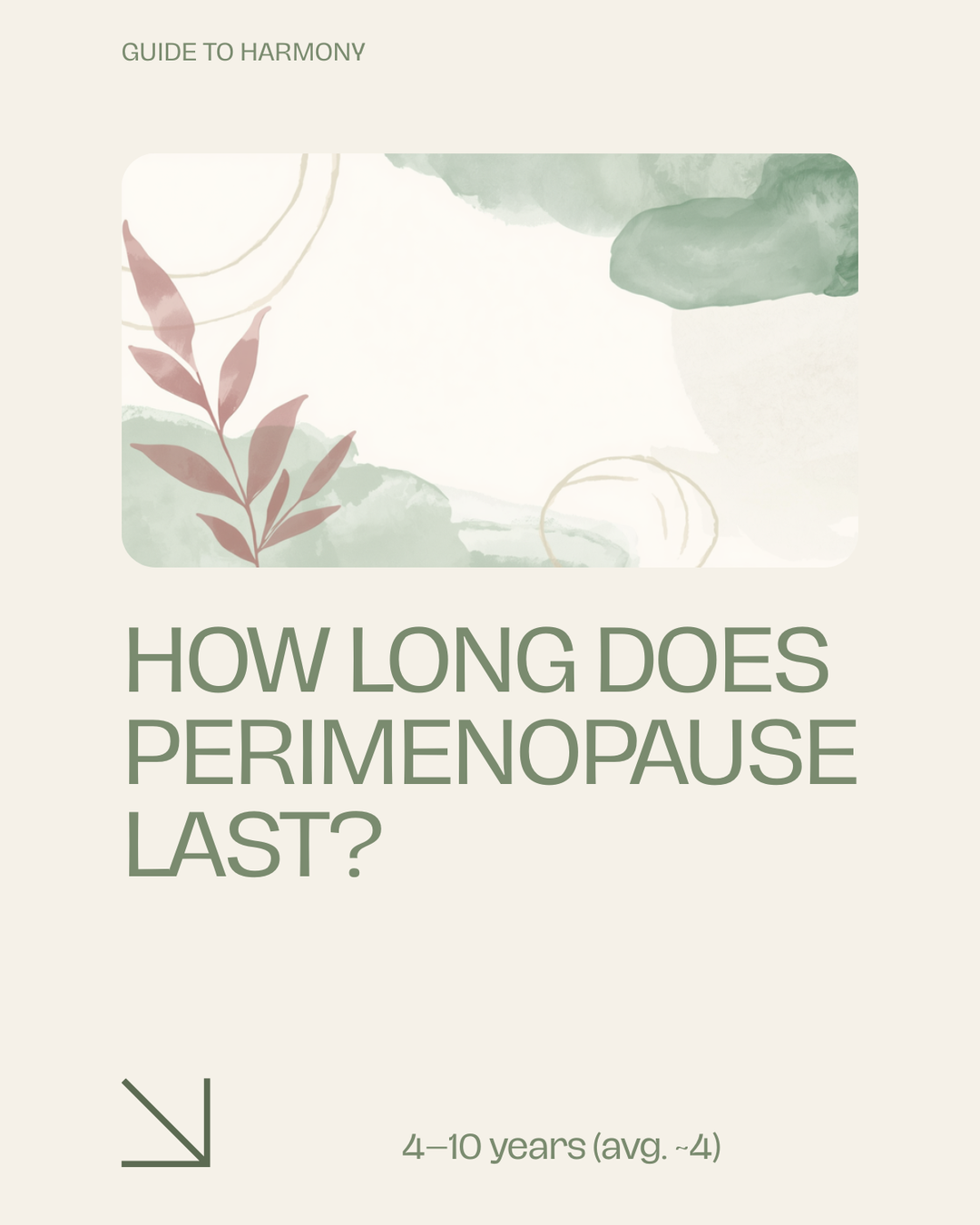
- How Long Does Perimenopause Last? — A realistic look at how long this transition tends to last, and what affects that timeline.
Understanding Your Symptoms
- Hot Flashes: Triggers and Relief — Why hot flashes happen, what tends to trigger them, and what actually brings relief.
- Menopause Weight Gain — Why menopause weight gain happens, and how tracking helps you see what’s really driving it for you.
- More on common symptoms — coming soon.
Tracking Your Symptoms
- How to Track Menopause Symptoms — The simple habit that turns confusing symptoms into a pattern you can actually see.
- Common Mistakes When Tracking Symptoms — The most common tracking habits that quietly stop working, and how to fix them.
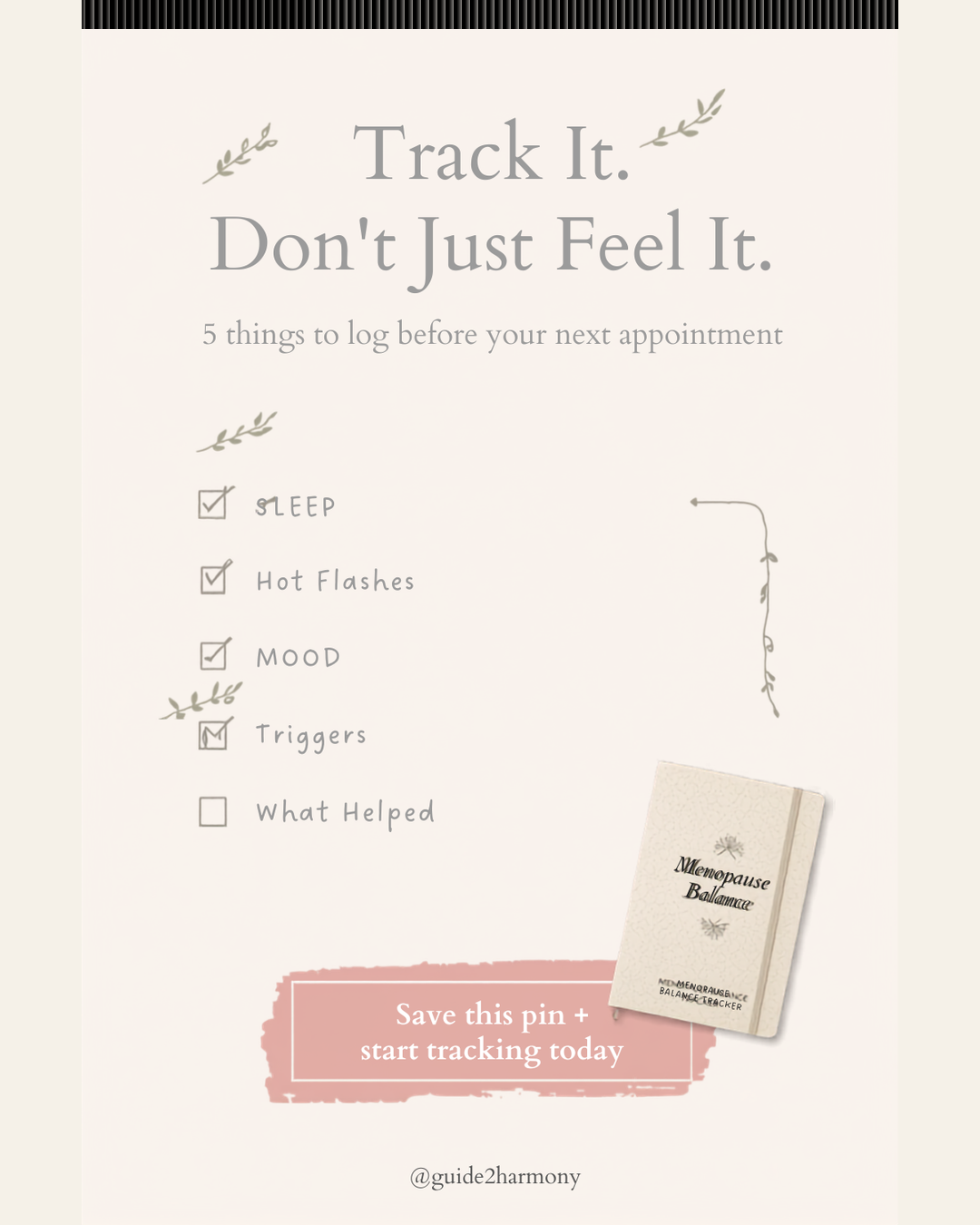
- 5 Things to Write Down Before Your Appointment — Five things worth writing down before your next appointment, so nothing gets missed.
Not sure where to begin?
Start with the free 7-Day Symptom Starter Log to discover your own symptom patterns.
Once you’re ready to track over time, the Menopause Balance Tracker helps you build a clearer picture of your progress.
Explore Related Topics
- Common Menopause Symptoms
- Sleep & Menopause
- Mood & Emotional Changes
- Brain Fog & Cognitive Changes
- Intimacy & Body Comfort
- Waking at 3 AM During Menopause
- Menopause Balance Tracker
A Note on Tracking
A simple journal can be a helpful tool during the menopause transition. Writing down daily observations allows patterns to emerge and helps bring clarity to changes that might otherwise feel unpredictable.
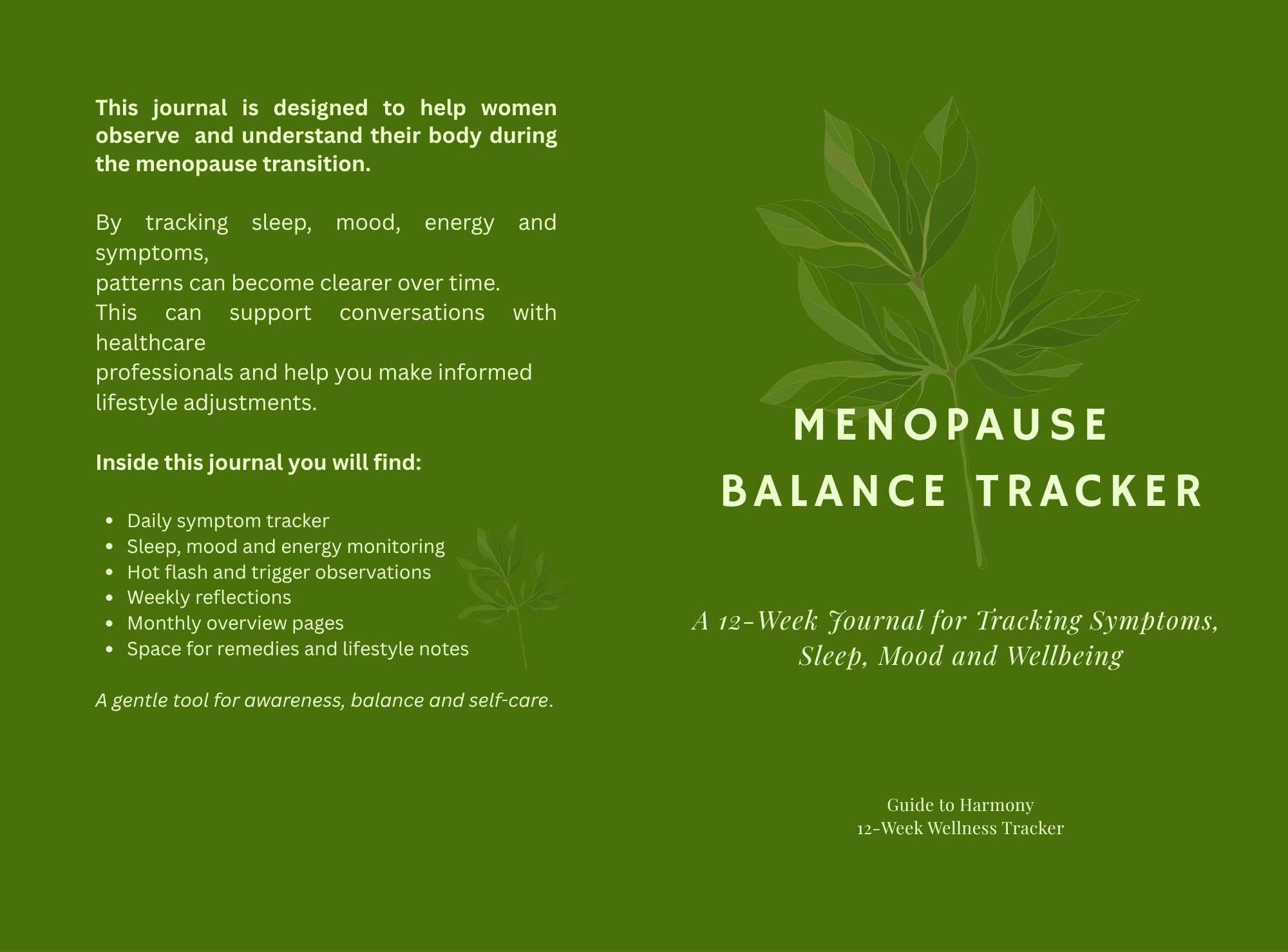
The Menopause Balance Tracker was created as a gentle space for observation, reflection, and self-awareness. Over time, it can help women notice connections between sleep, mood, lifestyle habits, and physical symptoms.
You do not need to figure everything out at once. Start with what you notice most. Follow the pattern gently. Let your body give you information over time.