
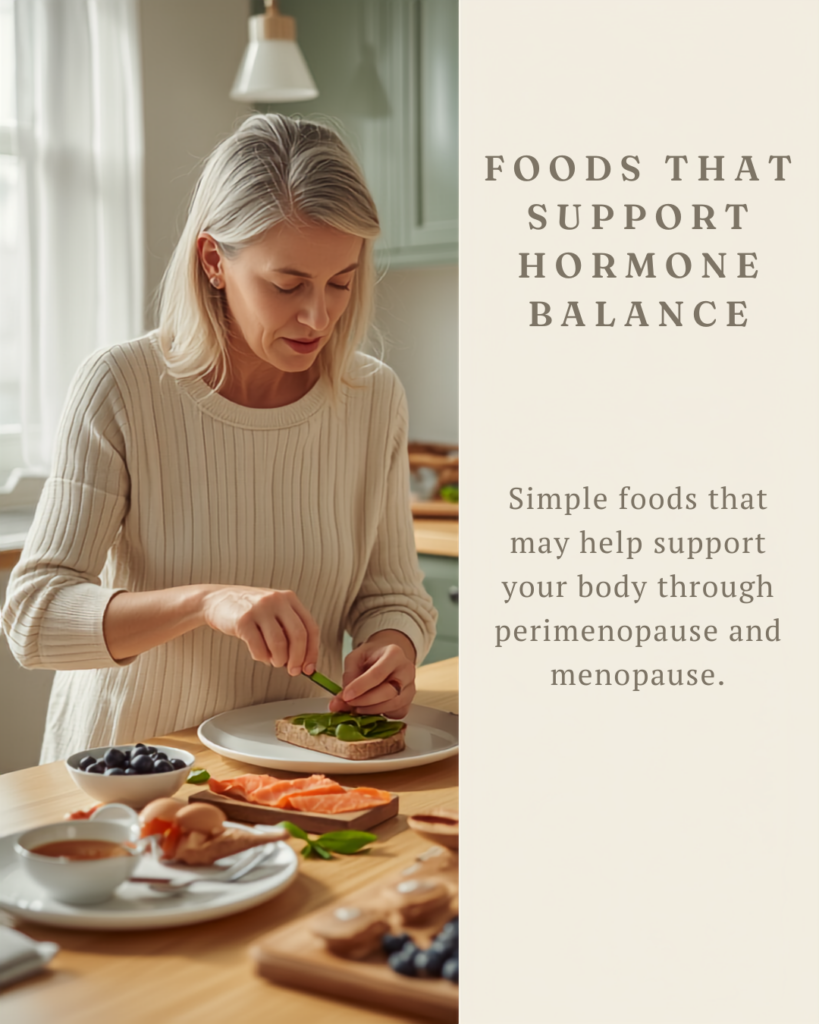
Food won’t override the hormonal shifts of perimenopause and menopause — nothing does that — but what you eat genuinely does influence how your body handles those shifts, from hot flash frequency to sleep quality to how stable your energy feels day to day. Here’s what the evidence actually supports, without the exaggerated claims that show up so often around this topic.
Phytoestrogen-rich foods
Phytoestrogens are plant compounds that loosely mimic estrogen in the body, and they’re one of the most researched food categories for menopause symptoms specifically.
Worth adding: flaxseed (ground, not whole, for better absorption), soy foods like tofu, tempeh, and edamame, chickpeas and other legumes, and sesame seeds. Effects vary between individuals, but many women find these genuinely helpful for hot flash frequency over time — not an overnight fix, but a reasonable, low-risk addition worth trying consistently for a few weeks.
Omega-3 rich foods
Fatty fish — salmon, mackerel, sardines, trout — bring anti-inflammatory omega-3s that support heart health, mood, and may ease some menopause-related discomfort. Two servings a week is a commonly cited, reasonable target. If fish isn’t part of your diet, flaxseed and walnuts offer a plant-based (if less potent) omega-3 source.
Vegetables that support hormone metabolism
- Leafy greens (spinach, kale, chard) — rich in magnesium, which supports hormone production,
sleep quality, and the body’s stress response
- Cruciferous vegetables (broccoli, Brussels sprouts, cauliflower) — support your liver’s
ability to process and clear excess hormones, which becomes more relevant as hormone levels shift
Whole grains and steady blood sugar
Quinoa, oats, brown rice, and barley provide fiber and complex carbohydrates that help keep blood sugar stable — which matters more during menopause, since blood sugar swings can worsen mood instability and energy dips that are already harder to manage during this transition.
Calcium and bone-supportive foods
Bone density becomes a more active concern after menopause, making calcium-rich foods worth prioritizing: dairy (or fortified plant alternatives), sardines, and leafy greens. Greek yogurt specifically combines calcium with protein and gut-supportive probiotics, which also play a role in how the body processes and recycles estrogen.
Foods worth limiting, not banning
- Added sugar — contributes to blood sugar swings that can worsen mood and energy symptoms
- Alcohol — a known hot flash and sleep-disruption trigger for many women
- Excess caffeine — can worsen anxiety and sleep disturbances, particularly later in the day
None of this means cutting these out entirely — it means noticing whether your own pattern connects to them, the same way our guide on hot flash triggers and relief suggests noticing your personal triggers rather than following a generic list blindly.
A simple way to start
Rather than overhauling everything at once, most women find it easier to add one or two things first — a daily tablespoon of ground flaxseed, one more serving of leafy greens, swapping one sugary snack for Greek yogurt — and build from there. Small, sustainable changes tend to stick better than a strict, all-at-once overhaul, and they’re easier to actually notice the effects of.
Putting it together
No single food fixes menopause symptoms, but a pattern built around phytoestrogens, omega-3s, cruciferous vegetables, whole grains, and calcium — with a lighter hand on added sugar, alcohol, and late caffeine — genuinely supports how your body handles this transition. If sleep or hot flashes are your biggest current struggle, our guides on sleep tips that actually work and hot flash triggers and relief go deeper on those specifically, and nutrition works alongside both rather than replacing either.
If you’d like to track how dietary changes connect to your symptoms over time, the free 7-Day Symptom Starter Log is a simple place to start — for tracking the fuller picture over months, including what you’ve tried and what’s actually helping, the Menopause Balance Tracker keeps it all in one place.
For more on this whole transition, our Menopause & Perimenopause FAQ covers the questions that come up most.
FAQ
How quickly can diet changes actually help with symptoms? Most women who notice a difference report it after a few weeks of consistent change, not days — this is a gradual-support approach, not a quick fix, and it’s worth giving it real time before judging whether it’s helping.
Do I need to go fully plant-based or vegetarian for this to work? No — none of this requires eliminating meat or dairy. It’s about adding supportive foods (phytoestrogens, omega-3s, cruciferous vegetables) alongside whatever your diet already looks like, not replacing it entirely.
Are soy foods actually safe during menopause? I’ve heard conflicting things. Current evidence supports whole soy foods (tofu, tempeh, edamame) as a reasonable, safe part of a menopause-supportive diet for most women — the conflicting information usually traces back to older, since-revised concerns rather than current research. If you have a specific health condition, it’s worth a quick check with your doctor.
Is coffee really off-limits? Not entirely — it’s about moderation and timing, not elimination. Cutting back specifically on afternoon and evening caffeine tends to help more with sleep and anxiety than eliminating morning coffee.
What if I make all these changes and don’t notice a difference? That’s genuinely common and not a sign you’re doing something wrong — food is one supportive piece among several (sleep, stress, movement, and sometimes medical treatment), not a replacement for the others. If symptoms are significantly affecting your life, that’s worth raising with a doctor regardless of dietary changes.