
Natural Support Routines for Perimenopause
Perimenopause doesn’t run on a fixed schedule the way a lot of general wellness advice assumes. Your hormones are fluctuating, not just declining on a steady curve — which is part of why the same habit that helped last month can feel like it’s doing nothing this month. That doesn’t mean routine doesn’t matter. It means the timing of what you do can matter almost as much as what you do. This article isn’t another list of good habits — we’ve already covered that ground in Gentle Daily Habits for Menopause Balance. This is about when and how to place those habits across your day so they work with your hormonal rhythm instead of fighting it.
Why timing matters more during perimenopause
During perimenopause, estrogen and progesterone don’t decline in a straight line — they swing, sometimes within the same week. That instability affects your cortisol curve (the hormone that naturally should be highest in the morning and lowest at night), your blood sugar sensitivity, and how easily your body settles into sleep. A routine that respects those patterns — rather than one built for a hormonally steady body — tends to feel more effective, even when it’s built from similar underlying habits.
A morning routine that supports your cortisol curve
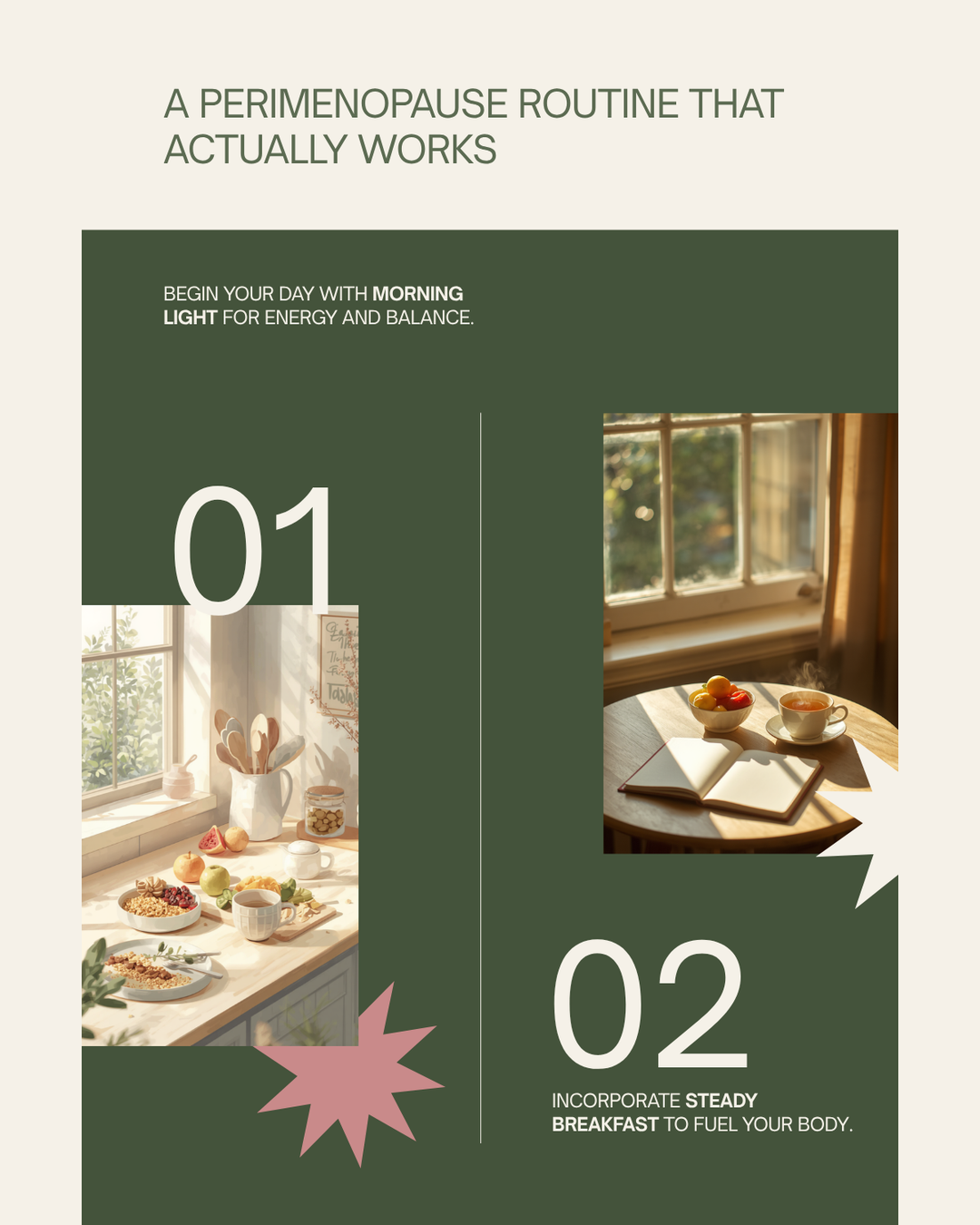
Get natural light early, ideally within 30 minutes of waking. Morning light exposure helps anchor your circadian rhythm, which in turn supports a healthier cortisol pattern for the rest of the day and better melatonin release that night. This doesn’t require anything elaborate — a few minutes by a window or a short walk outside is enough.
Eat a protein-and-fat-forward breakfast before reaching for caffeine. Blood sugar swings tend to feel sharper during perimenopause, and starting the day with protein and healthy fats — rather than something sugary or skipping breakfast entirely — helps keep energy and mood steadier through the morning. For the fuller picture on which foods help most, see Foods That Support Hormone Balance; this section is about when to eat, not what.
Move earlier in the day if you can. Morning movement — even just a brisk 10–15 minute walk — tends to have an outsized effect on mood and energy compared to the same activity later in the day, likely because it works with your natural cortisol curve rather than against an already winding-down one in the evening.
A midday routine that protects your energy
Don’t skip lunch, and don’t let it be an afterthought. A steady midday meal — again, built around protein and fiber rather than something quick and starchy — helps prevent the early- afternoon energy crash that can feel more pronounced during perimenopause.
Build in one deliberate pause. A short walk outside, a few minutes of slow breathing, or simply stepping away from a screen mid-afternoon gives your nervous system a genuine break, which matters more now than it may have a few years ago — perimenopause tends to lower your buffer for accumulated stress.
An evening routine that helps your body wind down
Start dimming light and screens an hour or so before bed. Evening light delays your body’s natural signal to produce melatonin, and that signal is already less reliable during perimenopause — giving it a clear, consistent cue helps compensate.
Keep your wind-down sequence the same most nights. Your body responds to consistency more than to any single “perfect” evening ritual — the same simple sequence (dim lights, a warm drink, a few pages of a book) repeated nightly for a couple of weeks tends to help more than a different, more elaborate routine tried once.
Keep your bedroom cool. Fluctuating hormones make you more sensitive to a warm room, so this one detail carries more weight now than it may have before. If waking at 3am is a specific, ongoing pattern for you, our dedicated piece on that goes deeper into what helps in that exact moment.
Putting it together: a realistic day, not a rigid schedule
None of this needs to be followed exactly or all at once. The pattern underneath all of it is simple: light and movement earlier, steady food throughout, wind-down cues consistent every night. If you only change one thing, morning light exposure and a protein-forward breakfast are the two with the most consistent research behind them — start there, and layer in the rest as it feels manageable.
Why tracking this actually helps
Because perimenopause symptoms fluctuate rather than following a predictable path, it’s genuinely hard to tell which part of a routine is helping just by remembering how you felt last Tuesday. This is exactly the kind of pattern that’s easier to see when it’s written down day to day — did a week of earlier mornings actually correlate with better sleep, or did something else change too? The Menopause Balance Tracker was built for exactly this kind of pattern-spotting — a simple daily place to log symptoms, sleep, mood, and the routine changes you’re testing, so you’re working from real data instead of a fuzzy impression. If you’d like to try tracking before committing to the full journal, our free 7-Day Symptom Starter Log is a gentler way to begin.
FAQ
Is this routine different from general “healthy habits” advice? Yes, deliberately. The underlying habits (movement, food, sleep hygiene) overlap with general wellness advice, but the timing here is specifically about working with perimenopause’s hormonal fluctuations — morning light and cortisol, evening light and melatonin, blood sugar sensitivity around meals — rather than a generic “be healthier” list.
What if my schedule doesn’t allow morning light or movement? The underlying principle — light and activity earlier in your day, whenever that day starts — matters more than a literal 7am timestamp. Shift workers and non-standard schedules can still apply this by treating “the start of your day” as the anchor point, whenever that actually falls.
How long before I’d notice a difference? Most people need a couple of weeks of reasonably consistent practice before patterns become clear — which is also why tracking matters here: two weeks is hard to accurately recall from memory alone, but easy to see clearly in a daily log.
Should I change my routine every time my symptoms change? No — that’s the trap. Hormonal fluctuation during perimenopause means some day-to-day variation is normal and not necessarily a sign your routine isn’t working. Give a routine a couple of weeks before judging it, rather than abandoning it after one off day.